Since I'm primarily interested in programming, but still enjoy game design, my portfolio will include a number of programs that I have written, several of which are games. Everything included in this post is meant for Option 7 of the GDD110 final portfolio assignment.
#1) Arena Shooter
The following game was made in 4-6 hours. The purpose of this was to start and finish a short, simple computer game using Game Maker with a limited amount of time. The game is complete and functional, but has a number of design flaws.
The game does not use any images for its graphics, nearly everything is made with simple circle- and line-drawing functions that are built into Game Maker's programming language.
The major problem is with the gameplay. There are several different enemies that the player fights, and most of the player's time is spent running away from the smallest type, which chases the player relentlessly when it gets within a certain distance. The other enemies are little more than distractions, something to avoid running into while fleeing from the little guys. The max number of each enemy in the game is determined by the player's score, and the game checks every few seconds to see if the number of enemies is below the max. If it has, it will spawn however many are missing in random locations across the screen. This ensures a constant supply of the small chasers, which in turn prevents the gameplay from changing significantly.
Download Arena Shooter v1.0.exe
#2) Square SHMUP
The name sums up the entire game - it's a simple scrolling shooter with graphics made out of red squares.
Scrolling shooters are relatively easy to design and program, which makes them an ideal project for beginners. I started a number of scrolling shooter games during middle school and high school, and this is the most recent. The result, although incomplete, is a functioning game with passable gameplay. Although the graphics are very simplistic, I was very pleased with the game's appearance.
One of the game's biggest issues is the lack of a level structure. When I programmed this game, I wasn't interested in designing levels. So instead of following a previously designed level structure, the game will randomly spawn enemies every few seconds. The pool of enemies from which the spawner chooses grows with each wave. But this is very repetitive, and won't remain interesting for very long. To make this work, I would need to make the game very fast-paced, provide a large assortment of enemies to fight, and create a more sophisticated system for randomly spawning enemies.
Download SHMUP.exe
#3) Text-Based Minesweeper
This is a small project I made because I was interested in using text to replace a GUI. Minesweeper seemed perfect for this: it was a simple game that I could easily implement in Java and the UI is essentially a grid, which can easily be represented with command line text.
This game is the end result, but it still has two small issues: the user can choose a mine on their first attempt and the user has to press enter to confirm each action. Other than that, it's a fully functional, text-based version of Minesweeper. In keeping with my creative titles, the game file is called "TextSweeper".
Download TextSweeper Files
#4) The Same Game
The Same Game, like Minesweeper, is a simple game that can be found all over the internet and packaged with some operating systems. It goes by a variety of names, and there are many variations of it: Poppit!, Gravity Tiles, SameGNOME, etc. Again like Minesweeper, the game uses a simple grid layout, and has very simple rules governing its behavior. This is why I decided to try adapting the classes that I wrote for Textsweeper to create the Same Game. It was even easier than I had anticipated, and this is the result.
Download SameCHAR Files
#5) Other Java programs
I have also included several short Java programs that are not necessarily game-related, but some can be used in games. Each of these was written for a computer science class taught at Quinnipiac.
Bucket Sort - This is a very short program that implements a sorting algorithm called Bucket Sort. When the program is run, it will randomly generate a list of numbers, print the list, sort it, and print the sorted list (on the command line).
GCD - This program contains implementations of two algorithms for finding the greatest common denominator of a pair of numbers (Euclid's algorithm and the consecutive integer algorithm), but its primary purpose is to measure the number of operations performed during each algorithm's execution. This is important when determining an algorithm's efficiency.
Guess - This program implements a binary tree, which is used to learn how to play a twenty questions-like game with the user. It begins with a single question and two answer, and asks the user to think of some object. It then asks its question, makes a guess, and is usually wrong. Whenever it turns out to be wrong, it asks the user for a question that can distinguish between the answer it gave and the object that the user was thinking of. It adds this information to its tree, and will slowly accumulate knowledge with every game it plays.
Guess uses an additional class called TreeNode, which must be downloaded and compiled with it before it can run:
Download TreeNode.java
Thursday, December 15, 2011

Wednesday, December 7, 2011
Minor Project 12
Option 1:
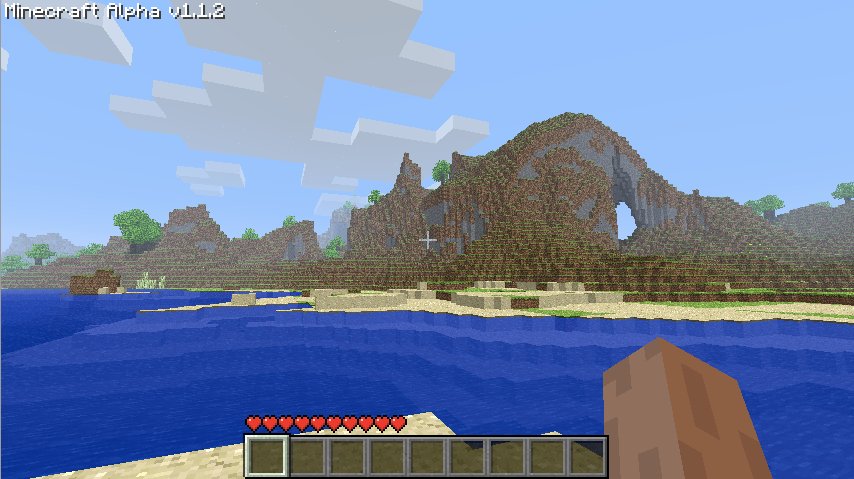
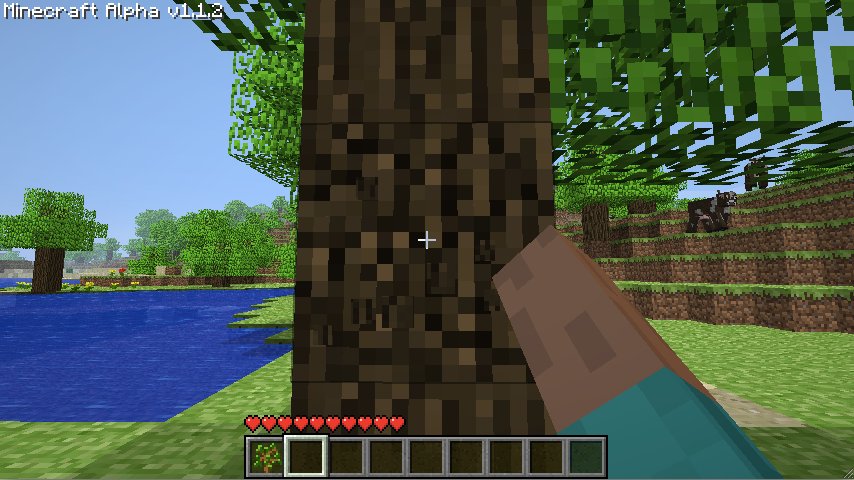
I've chosen Minecraft as my inspiration. The below images show the player starting a game and beginning to gather resources before nightfall. They are from the following tutorial: http://gangles.ca/2010/09/20/beginners-guide-to-minecraft/


Option 2:
Similar to Minecraft, the game that I've imagined is a very open, sandbox game. The environments, landscapes, cities, etc. can be extremely varied. The game would have more realistic graphics, and focus on the building of structures that adhere to realistic physics. It's hard to describe a specific type of landscape or cityscape specific to the game, since the terrain can be procedurally generated and players would build the cityscapes in the pursuit of various goals. The player would also be able to play as a variety of animal characters with very unusual bone structures (See option 8).
Option 3:

Option 4:

Option 5:

Option 6:


Option 7:


Option 8:


Extra Credit: Couldn't render with Poser, so I'm not sure how I can make the storyboards without transparent images of my characters.
I've chosen Minecraft as my inspiration. The below images show the player starting a game and beginning to gather resources before nightfall. They are from the following tutorial: http://gangles.ca/2010/09/20/beginners-guide-to-minecraft/


Option 2:
Similar to Minecraft, the game that I've imagined is a very open, sandbox game. The environments, landscapes, cities, etc. can be extremely varied. The game would have more realistic graphics, and focus on the building of structures that adhere to realistic physics. It's hard to describe a specific type of landscape or cityscape specific to the game, since the terrain can be procedurally generated and players would build the cityscapes in the pursuit of various goals. The player would also be able to play as a variety of animal characters with very unusual bone structures (See option 8).
Option 3:

Option 4:

Option 5:

Option 6:


Option 7:


Option 8:


Extra Credit: Couldn't render with Poser, so I'm not sure how I can make the storyboards without transparent images of my characters.
Thursday, December 1, 2011
Minor Project 11
1) I'm assuming that the portfolio in question will be created sometime in the future, when I have the necessary work to include, rather than the final portfolio for this class.
Since I'm very interested in both programming and designing games, I plan on creating a portfolio of work on small, casual games and other software that I'd worked on prior to making the portfolio. This type of portfolio would be ideal for demonstrating design and programming skills. When creating a physical portfolio, I would include each part of a single game that I've created (Brief design document, level/character designs, screenshots, etc.), as well as parts of other games. This would hopefully show experience with a variety of games as well as providing a more complete picture of the work I put into one project. A digital copy of the games in the portfolio would also be included.
Example: The 2 pictures below are from a simple game that I started several years ago.


2,3) Stick Figure Poses & attempted walk cycle

4) Character: Nameless (Player enters name)
Positive Traits: Despite being trapped in an enormous structure with no memory of how he arrived there, Nameless has the potential to survive the ordeal and escape. He's fairly strong and athletic, able to navigate the more dangerous levels of the maze with its numerous obstacles. As a cop, Nameless is able to defend himself and knows how to use firearms. He is well-prepared for whatever challenges await deep within the maze.
Negative Traits: Nameless suffers from several mental illnesses, and has been known to hallucinate and experience mental breakdowns. He has no memory of how he arrived in the maze, and his mental issues will create an even more dangerous environment. He has no way of knowing if his ordeal is real or the result of a psychotic break from reality, and this uncertainty may affect important decisions as he tries to escape.
Visual Characteristics: Nameless is average height with a lean, slightly muscular build. He has short hair, glasses, and typically wears sweatpants and a t-shirt. Nameless also has a scar on his right forearm, the remains of a knife wound he received many years ago.
Back Story: Nameless lost his wife in an accident years ago, and has witnessed several deaths during his career as a police officer. After being forced to shoot an armed woman on the job, he was evaluated by a psychiatrist and deemed unfit for duty. He is currently on medical leave, and suffering symptoms of several mental illnesses. His condition had been deteriorating recently, and he now finds himself in the middle of a bizarre structure with no idea how arrived there.
5) Character Attempt

7,8) Attempted to start storyboard. Next to nothing for this one.

Thursday, November 17, 2011
Minor Project 10
Option 1:

Option 2:

Option 3:
My career goal is unclear at this point. I primarily enjoy programming and actually designing games, and working with programs like game maker allows me to easily do both. I find Indy games very appealing, and at the moment I can most easily see imagine working in a smaller company where I would be able to perform both roles - programmer and designer.
I've started many small game projects before, and completed several. When putting together a portfolio, I would focus on smaller projects that demonstrate an ability to program and create interesting game designs and mechanics. Plans for larger games, and software tools to aid in game development would also be useful additions to my portfolio. I think I will end up creating software tools for myself when developing small games, and I enjoy expanding on ideas for larger games, so I will be able to include these in my portfolio.
Option 8:

Thursday, November 10, 2011
Mini Project 9
Waking up with a throbbing headache, you open your eyes and see a blurry brick wall. As your vision clears, you stand up a little too fast, nearly blacking out as a feeling of light-headedness hits you. Leaning against the wall, you finally take in your surroundings: you're standing in a long, narrow corridor made entirely of bricks and illuminated by a flashlight lying at your feet.
The game takes place in an immense structure, each floor composed entirely of mazes. The player must find their way out, navigating through progressively harder mazes, avoiding the many hazards of the poorly maintained building, and interacting with the other poor souls trapped in the never-ending tower of mazes.
Sample Levels
Simple:

Complex:

Brick Texture:

Simple Maze Constructed in Maya:

The game takes place in an immense structure, each floor composed entirely of mazes. The player must find their way out, navigating through progressively harder mazes, avoiding the many hazards of the poorly maintained building, and interacting with the other poor souls trapped in the never-ending tower of mazes.
Sample Levels
Simple:

Complex:

Brick Texture:
Simple Maze Constructed in Maya:

Sunday, November 6, 2011
Thursday, October 27, 2011
Character Design
The following is a character "designed" while play-testing a storytelling dice game in GDD101. The storyline tends to get ridiculous, but I think this type of role-playing exercise has the potential to develop interesting characters that aren't as absurd as this one.
Character Design – The Mummy Lord
Positive Traits – This mummy can only communicate telepathically, but understands the thoughts of camels, ostriches, English-speaking humans, and other undead. Since becoming a mummy, he gained control of an Egyptian pyramid and its resident mummy horde. He knows the location of a spacecraft hidden deep within the pyramid, left behind by the extra-terrestrials who built the structure.
Negative Traits – The Mummy Lord is very bitter, spiteful, petty, and vindictive. He despises ostriches after one almost killed him inside the pyramid, and seeks revenge against that ostrich. Before he was a mummy, this man was a blind, deaf mute wandering the desert, and his mummification hasn’t restored his sight or hearing. He can now make unpleasant hissing and grunting sounds, but is still incapable of speech.
Visual Characteristics – The mummy lords has had little time to decay, and is very bulky for a mummy. His bandages lack the dull, yellow color of older mummies. His left arm is missing several chunks from a run in with a camel before his mummification.
Back-Story – While trapped within a pyramid in the Egyptian desert, the blind, deaf mute was almost killed when an ostrich nearly caused part of the pyramid to cave in. In his attempt to kill the ostrich, he allowed the pyramid’s undead horde to mummify him and came to rule over the pyramid.
*For this week, I did options 1 and 2.
*For this week, I did options 1 and 2.
Thursday, October 20, 2011

Thursday, October 13, 2011

Sunday, October 9, 2011
Difficulty Curves
The two Portal games illustrate the idea of a difficulty curve beautifully. The game revolves around a series of tests that the player's character must pass. While the purpose of the testing is never made clear in the game, from a design standpoint they're clearly intended to teach the player to use "portals" to solve increasingly complex puzzles. The puzzles begin as very simple tasks, introducing the player to cubes that can be carried, buttons that can be held down by the player's weight or a cube placed on top of it, and the portal. As the game progresses, the player is given control of one, and later on both portals. The player is introduced to new elements, such as a deadly ball of energy that must be guided into a switch to progress through the test, walls on which no portals can be placed, and deadly robots. Every new obstacle is introduced slowly, so that the player is able to understand how to overcome that obstacle. In later levels, the same obstacle is used in new ways, sometimes combined with other obstacles, to produce a more difficult challenge. Every level builds on the previous level, teaching the player a new skill and then forcing them to apply it to a novel situation.
For an excellent example of Portal's learning curve, the 7-minute video below shows a walk-through of the level where hostile robots are first introduced to the player. As the level progresses, the robots are placed in move difficult positions, forcing the player to come up more more creative strategies to get past them.
For an excellent example of Portal's learning curve, the 7-minute video below shows a walk-through of the level where hostile robots are first introduced to the player. As the level progresses, the robots are placed in move difficult positions, forcing the player to come up more more creative strategies to get past them.
Thursday, October 6, 2011

Game Examples
Realistic Graphics: Crysis
Crysis is a first-person shooter that, when it was first released, had some of the most incredible graphics I had ever seen. It still looks great today, along with its successors.
Abstract Graphics: Dwarf Fortress
Dwarf Fortress's graphics are about as abstract and unrealistic as possible: everything in the game is represented by ascii characters.
2D Game: Spelunky
Spelunky is a 2D platformer that mimics the style of older games. It has very low-resolution sprites, and no 3D aspects to it.
3D Game: Minecraft
Minecraft is a fairly simple game with an environment composed primarily of large cubes. It uses very low-resolution textures to give an old, retro look to its graphics.
1st Person: Halo
Halo is a well-known first person shooter.
Real-World to Game-World: Reversi
An old board game that has been re-created many times for computers, phones, etc.
Compelling Storyline: Assassin's Creed
The Assassin's Creed series has a well-developed plot that spans many centuries and centers around a conflict between the Templars and Assassins.
Wednesday, September 28, 2011
RPS - Linear, Sandbox, or Something Else?
It's hard to classify Rock, Paper, Scissors as linear or sandbox. It's an incredibly short and simple game, and hardly fits any model that would categorize other games. The structure of the game does give it a clear set of directions and a specific goal, and playing it is very straightforward. There is little room for any variation or experimentation, so if it comes down to linear versus non-leaner/sandbox, RPS would have to be categorized as linear. I think it makes more sense to group short, simple games that really lack a linear or sandbox structure into their own group though. Games like rps, tic-tac-toe, odds or evens, etc. don't fit into either group and would be more suited to their own classification.
RPS Logo Examples
From the West Egg Literati website:

From "DanTheCatchphraseMan's" Deviant Art profile:

From the "New Rock Paper Scissors HD" app:


From "DanTheCatchphraseMan's" Deviant Art profile:

From the "New Rock Paper Scissors HD" app:

Thursday, September 22, 2011

Tuesday, September 20, 2011
Everything is Rock, Paper, Scissors?
I find that some aspects of chess fall into the Rock, Paper, Scissors model that seems to describe so many games. The different chess pieces each have their own rules for movement. This simple variation produces radically different uses for each piece. Each has its own strengths and weaknesses; for every piece there is another piece or configuration of pieces that can counter it. Certain pieces can't even touch each other, much like a draw in RPS. Each player has two bishops, each of which can only move on a certain color tile. A bishop that moves across black tiles can never interact with one that moves on white tiles. A wall of pawns, each covering a neighbor diagonally, is impossible to penetrate with a rook. But the right bishop or a queen can easily circumvent this obstacle.
The problem with applying RPS to chess is that chess is much more complicated. While these advantages and disadvantages of different pieces do play a role in strategy, foresight and careful planning are much more important than pitting each piece against its favorite enemy. Another exception would be the queen, which is superior to every other piece. Because of the chess's complexity, this hardly breaks the game as it would in RPS. A queen can still be captured, so while this game does adhere to an RPS model in many ways, it's implementation of this mechanic is not as final as RPS. The effects are softened by the number of pieces each side has and the number of moves that must be made for a piece to be captured or the game to end.
The problem with applying RPS to chess is that chess is much more complicated. While these advantages and disadvantages of different pieces do play a role in strategy, foresight and careful planning are much more important than pitting each piece against its favorite enemy. Another exception would be the queen, which is superior to every other piece. Because of the chess's complexity, this hardly breaks the game as it would in RPS. A queen can still be captured, so while this game does adhere to an RPS model in many ways, it's implementation of this mechanic is not as final as RPS. The effects are softened by the number of pieces each side has and the number of moves that must be made for a piece to be captured or the game to end.
Thursday, September 8, 2011
Favorite Historical Game
While not as old as examples mentioned in the text, the board game "reversi" has been around at least 100 years. It's hard to say why I love the game; it may be because of how well I understand the strategy. I'm not a great player by any means, but I understand it at a level that I don't often reach in other board games like chess, checkers, etc. Knowing how reversi works, as opposed to being pretty clueless when playing chess, makes reversi more interesting for me than other board games.
Rock, Paper, Scissors Rules
Rock, Paper, Scissors
Requirements:
- 2 or more players
Mechanics:
- Rock beats scissors
- Scissors beat paper
- Paper beats rock
Revealing Your Choice:
- It is common practice for both players to simultaneously say, “Rock, paper, scissors, shoot!”
- Each player then makes one of three symbols with their hand to symbolize their choice:
- A fist represents a rock
- A fist with index and middle finger extended and spread apart represents scissors
- An open palm with each finger touching its neighbor(s) represents paper
2-3 Players
2 Players:
- Each player secretly chooses rock, paper, or scissors
- Both players simultaneously reveal their choices
- Refer to mechanics to determine the winner
- A draw can be resolved by another 2-player game
3 Players:
- Play each permutation of a 2-player game
- Option 1:
- Each winner gets one point
- The person with the highest score wins
- A draw can be resolved by another 3-player game
- Option 2:
- Each loser gets one point
- The person with the highest score is eliminated
- A draw can be resolved by another 3-player game
- The remaining players play a 2-player game to determine the winner
4+ Players
2X Players (i.e. even number of players):
- Players split into 2 games of X players
- Resolve the two games, leaving a winner from each of the X-player games
- The 2 winners play a 2-player game
2X+1 Players (i.e. odd number of players):
- Players split into 2 games of X and X+1 players
- Resolve the two games, leaving a winner from each
- The 2 winners play a 2-player game
Subscribe to:
Posts (Atom)